
By Parker Savage.
Introduction
In recent years, the National Collegiate Athletic Association’s (“NCAA”) bylaws have been subject to scrutiny from courts around the country. In NCAA v. Alston, the Supreme Court unanimously reaffirmed that the NCAA was subject to antitrust scrutiny. Since then, student-athletes nationwide have sued to block NCAA rule enforcement. Courts have enjoined NCAA bylaws restricting name, image, and likeness compensation during recruiting, requiring student-athletes who transfer more than once to sit out for a season, and counting junior college seasons against eligibility.
Although many prominent stakeholders in collegiate athletics have lobbied Congress to pass legislation—such as the Protect College Sports Act, which would allow the NCAA to enforce its rules—these efforts have yet to provide any meaningful solution. Recently, conferences have explored a new approach. The conferences agree on their own set of rules and, if the rules are broken by a member of the conference, the conference sues in federal court to enforce them. Two cases suggest that the power of a conference’s federal lawsuit to enforce agreed-upon rules lies less in winning than in the threat of it.
Texas Tech and the Big 12
In April 2026, news surfaced that Texas Tech University quarterback Brendan Sorsby wagered at least $90,000 over four years on sports. That total included bets on Indiana University athletic events while Sorsby played at the school. Before the allegations surfaced, Sorsby was widely regarded as a top quarterback in college football entering the 2026 season.
The NCAA has strict rules prohibiting student-athletes from wagering on any NCAA-sponsored sport, and imposes an even stronger restriction preventing student-athletes from wagering on their own team. Sorsby was declared ineligible by the NCAA due to his wagers, leading him to file suit in Lubbock County (Texas) state court. To the surprise of many, Sorsby was granted a temporary injunction against the NCAA, deeming him eligible to participate in the 2026 season. Despite significant backlash, Texas Tech announced it would let Sorsby play on its team.
Every other institution in Texas Tech’s conference, the Big 12 Conference, expressed its displeasure to conference commissioner Brett Yormark. At the request of the other Big 12 institutions, on June 15, 2026, the Big 12 filed a lawsuit in Texas federal court against Texas Tech, seeking a declaratory judgment allowing the conference to exercise its First Amendment freedom of association and to sanction Texas Tech under its bylaws. The same day the lawsuit was filed, news broke that Texas Tech and Sorsby decided to mutually part ways, and the Big 12 later voluntarily dismissed the lawsuit.
LSU and the SEC
In June 2026, the NCAA changed its eligibility rules. The NCAA previously allowed student-athletes five years to complete four years of competition, but under the new rule all student-athletes simply have five years and are eligible to compete for all five years.
This rule change did not retroactively apply to recently graduated student-athletes who competed for four seasons over four years. These student-athletes exhausted their eligibility under the previous rule, but would have one year of eligibility remaining under the new rule. The change prompted student-athletes to file lawsuits around the nation, seeking injunctive relief to allow them to compete in the 2026 season. As many of these lawsuits succeeded, stakeholders decried the idea of “professional” athletes returning to college.
Louisiana State University (“LSU”) quickly became the subject of controversy, as it sought to add two players who signed contracts with the National Football League (“NFL”). All of the other institutional members of LSU’s conference, the Southeastern Conference (“SEC”), were opposed to “professionals” returning to college football. The conference held a vote and agreed 15–0, with LSU abstaining from the vote, to reaffirm its ban on players who signed a professional contract and impose penalties on any institution that violated the rule, including fines and coach suspensions. Less than a week before LSU’s first game, Dae’Quan Wright and Zxavian Harris obtained an injunction in Baton Rouge (Louisiana) District Court against the NCAA’s eligibility rules and the SEC’s enforcement of its rule against professionals. The pair sought to be among the first student-athletes to sign contracts with the NFL and return to collegiate athletics.
LSU persisted in its efforts to roster the student-athletes. On September 3, 2026, two days before LSU’s first regular-season game, the SEC filed suit against LSU in federal court in Alabama. Similar to the Big 12’s filing, the SEC sought a declaratory judgment allowing the conference to exercise its First Amendment freedom of association and to enforce its bylaws, while also scheduling a vote on whether to expel LSU. Ultimately, LSU chose to fill its open roster spots with two other student-athletes, and Wright and Harris were never added to its roster.
Why the Threat Works
With Congress increasingly unlikely to pass the Protect College Sports Act, conferences will likely have to enforce their own rules. While the NCAA is subject to antitrust scrutiny, individual conferences may face less antitrust scrutiny because they arguably do not possess the same breadth of market power as the NCAA. As illustrated by Sorsby’s, Wright’s, and Harris’s lawsuits, student-athletes suing for relief from NCAA bylaws tend to litigate in local state courts that are often more sympathetic to a student-athlete playing for the local institution. By raising federal claims, conferences are able to litigate in a federal forum in their home districts, and away from the state courts in which student-athletes typically file.
Ordinarily, conferences can enforce their rules through membership agreements without a declaratory judgment. In both of these suits, however, the conferences faced legal threats to their authority. In LSU’s case, a state court injunction directly barred the SEC from acting. Thus, if conference self-governance is widely adopted, lawsuits like these would likely be last-resort options, saved only for those disputes that escalate due to extreme opposition to an institution’s noncompliance.
Notably, the SEC’s First Amendment claim rests on the theory that a state court injunction is government action that violates its right to choose its own members. However, it is at least arguable whether a collegiate athletic conference is engaged in expressive association, and the SEC’s suit may also raise federalism concerns, since it asks a federal court to undercut a state court’s ruling.
Conclusion
While the underlying merits of these conference-initiated lawsuits may be questioned, the merits of the lawsuits may not ultimately matter. In both cases, the institutions quickly backed down when faced with litigation and the potential of heavy institutional sanctions. When an institution is confronted with the possibility of heavy sanctions, and even expulsion from its conference, breaking the rules is not worth the risk. This heavy risk makes the combination of a lawsuit and potential sanctions from a conference an effective deterrent.
Ultimately, collegiate athletics will almost certainly face more legal challenges, and the success of conference self-governance and federal lawsuits of this nature will continue to be tested.
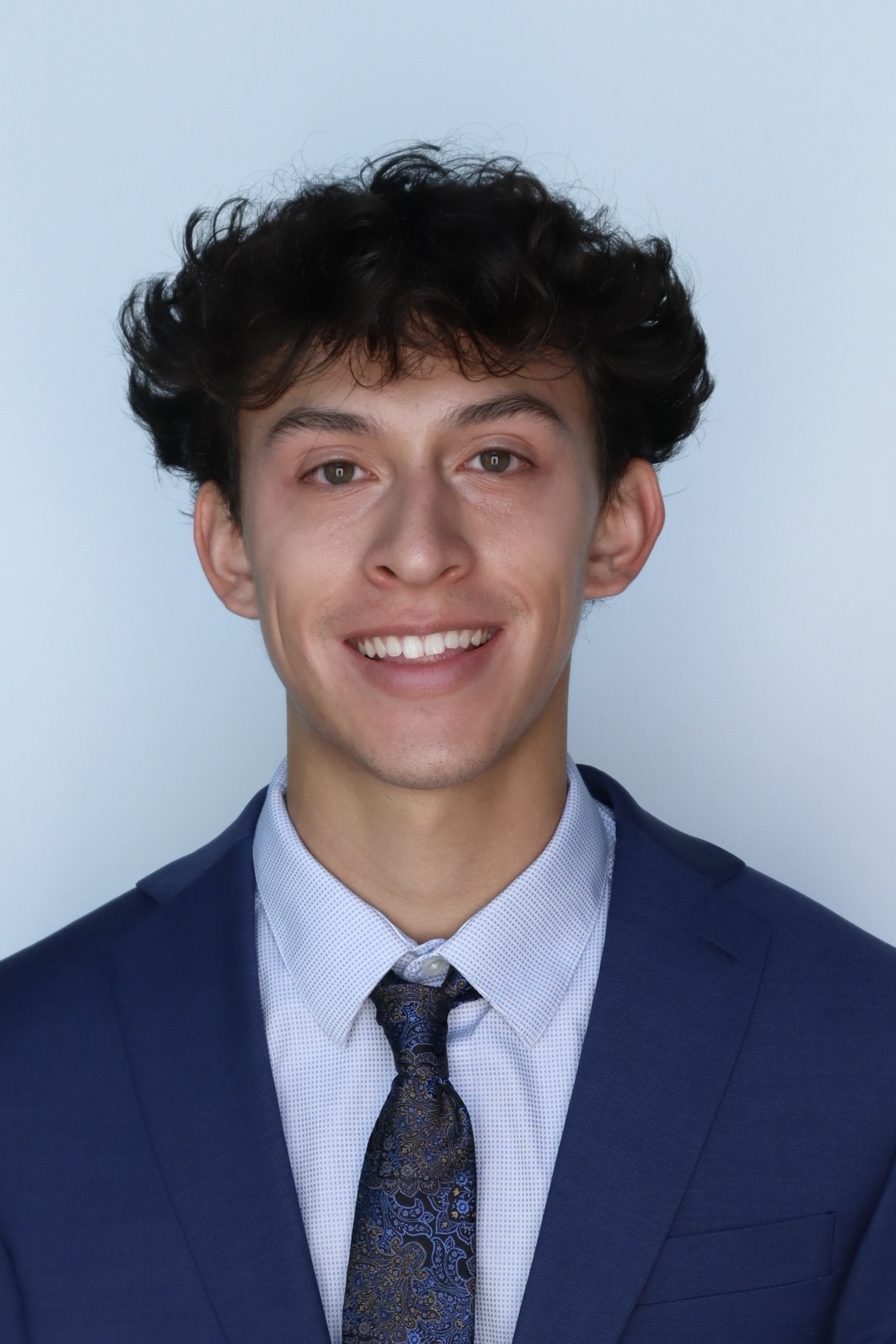
Parker Savage is a 2L at the Sandra Day O’Connor College of Law. He was born and raised in Phoenix, Arizona, and earned a bachelor’s degree in business law from Arizona State University. With an enthusiasm for business and law, Parker plans to pursue a career in mergers and acquisitions and corporate transactional practice. While in law school, he has enjoyed participating in clubs and organizations such as the Business Legal Assistance Program. In his free time, Parker enjoys working out, watching sports, and spending time with friends.
