
By Theodore Machado.
Arizona’s Housing Crisis
America is in the midst of an affordability crisis, which is especially apparent in housing prices. Nationwide, the average home price is now five times the annual median household income. Comparatively, home prices sat slightly above three times the median household income throughout most of the 1990s. When adjusting for inflation, median rent prices have gone up 75 percent in the past six decades, while the median renter income has increased just 15 percent in the same timeframe.
Arizona is no exception to the nationwide housing crisis. Even though Arizona may have been historically known as an affordable state (especially when compared to our neighbor California and its infamous cost-of-living issues), Arizona’s housing prices now outpace the national average. Arizona is among the fastest-growing states in the nation.The state’s population has grown 22% since 2010 while the housing supply has lagged, growing only 12% in the same time. The Common Sense Institute estimates that Arizona faces an immediate housing shortfall of over 55,000 units, a gap that would take over 119 years to fill at current permitting rates.
Naturally, the mismatch between Arizona’s housing supply and demand can have a significant effect on driving housing costs upwards. Only 42% of Arizona households in 2026 can afford a new mortgage payment, down from 66% in 2019.
Arizona renters are feeling the squeeze too. In 2022, almost half of all Arizona renters were cost-burdened. The average rent for a one-bedroom apartment in Phoenix is now $1,200 a month. This requires a salary of $48,000 a year—which is well above Phoenix’s per capita income of ~$42,000—in order to keep spending on housing costs at recommended levels. High rental costs are especially worrisome for renters because they are unable to build equity in their homes, which impacts younger renters’ ability to invest for retirement while building wealth.
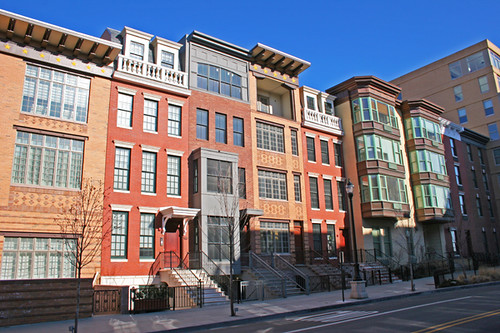
So, what are the possible sources of Arizona’s widespread housing crisis and the supply shortage of housing units? A potential culprit could be the “Missing Middle”. Middle housing occupies the zone between single-family housing and high-rise apartments, with configurations like duplexes and townhomes. The reason that middle housing is considered “missing” is because zoning laws have traditionally made middle housing difficult to build. This results in low-density single-family developments where middle housing could have otherwise been built. A possible solution to this issue is to encourage development of denser middle housing, which would increase supply and bring housing costs down.
HB 2721: The “Middle Housing” Bill
Arizona HB 2721 is primarily designed to increase the supply of middle housing. The bill requires cities with populations over 75,000 to allow middle housing such as duplexes, triplexes, fourplexes, and townhomes, to be built on land that would otherwise be zoned for single-family homes within a one-mile radius of the city’s central business district (downtown). Additionally, any new housing development above a certain size must be at least 20% middle housing. The bill also has provisions that would prevent cities from implementing restrictions on middle housing that would effectively defeat the purposes of the legislation, along with some exceptions for areas that lack “sufficient urban services” among other narrow carveouts.
Support for HB 2721 stems from several perspectives. Governor Katie Hobbs and State Representative Micheal Carbone emphasize a common argument for expanding middle housing: that Arizona should increase housing supply. Advocacy groups such as the Urban Phoenix Project also note how expanding middle housing could have beneficial effects for urban design and climate change, emphasizing that infill development can make more effective use of existing infrastructure in city cores while preventing inefficient, car-dependent suburban sprawl on the fringes of metropolitan areas.
The opposition to HB 2721 also focuses on a range of issues. Organizations such as Preserve Phoenix and Save Historic AZ mention that the legislation could lead to the demolition of unprotected historic neighborhoods while encouraging the development of overpriced “luxury” housing that would fail to address the housing affordability crisis.
Despite the opposition, the Arizona Senate and House of Representatives voted in favor of the bill by 21 to 7 and 42 to 15 respectively, and Governor Hobbs signed it into law on May 21, 2024. The enforcement provisions of the bill (now codified as A.R.S. § 9-462.13) kicked in on January 1, 2026.
The Future of HB 2721 and Related Housing Legislation
It will likely take a long time to understand the full impact of HB 2721 on the housing supply. Given that enforcement began this year, and multifamily housing projects take an average of 27.6 months to get from inception to delivery, it is entirely plausible that housing projects enabled by HB 2721 have not been completed yet. Though permitting data could be a helpful leading indicator of the bill’s potential impact, it is probably still too soon to say whether it has had a discernible impact on middle housing permitting for similar reasons.
HB 2721 is not alone, as other states have joined the effort to fight the housing crisis by promoting denser housing. California’s recently enacted SB 79 lifts density restrictions near mass transit to increase the housing supply while discouraging car dependence. Montana’s SB 243 requires cities above a certain size to increase height limits for multifamily residential zones. States ranging from Oregon to Florida to Massachusetts have also gotten in on the action by promoting similar legislation that encourages middle housing and denser development.
Regardless of how effective HB 2721 and its compatriots may be at promoting middle housing and housing density more generally, they will likely be only part of the solution to tackling the housing crisis. The Arizona Legislature has introduced a number of other bills that attempt to address housing prices from several angles, from providing tax credits and rental assistance to restricting institutional investment in housing projects. Policymaking bodies will also have to address other issues that constrain housing supply, such as construction workforce and building material shortages.
Beyond HB 2721’s potential impacts on housing prices, the push to increase housing density may also have a number of fascinating effects on our urban environment. Will denser housing change how we work, commute, interact with neighbors, and organize ourselves in our communities? Could this change reduce urban sprawl and our environmental footprint in the Sonoran Desert? Only time will tell, and it will be fascinating to see how Arizona’s residential land use and zoning policies further evolve in the meantime.

Theo Machado is a 2L at the Sandra Day O’Connor College of Law. Before law school, he earned a bachelor’s degree at Arizona State University in Political Science and Economics. He is interested in the intersection between law and economic policy, particularly in the realms of consumer protection, energy, housing and transportation. Outside of class, Theo enjoys volunteering at the Arizona Legal Center, biking in the winters, swimming in the summers, and watching sci-fi.